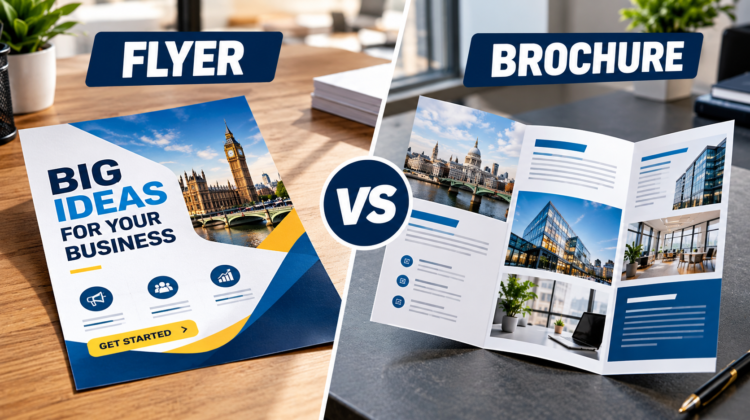
Brochure vs Flyer: Which Print Format Fits Your Message?
Choosing between a brochure and a flyer seems simple until your artwork is ready and the message won’t fit, or the piece is too bulky to hand out at a busy stand. The brochure vs flyer decision comes down to three things: how much you need to say, how the piece will be used, and how it will reach your audience. This guide compares both formats so you can match the right one to your goal.
What Is the Difference Between a Brochure and a Flyer?
A flyer is a single printed sheet, usually one or two sided, designed to deliver one quick message. A brochure is a folded or multi-page printed piece that explains a product, service or organisation in more depth. In short, flyers announce and promote, while brochures inform and persuade.
Both are core marketing materials, and both work well when used for the right job. The difference lies in the job each one is built to do.
Brochure vs Flyer at a Glance
| Factor | Flyer | Brochure |
|---|---|---|
| Amount of information | Low: one headline, one offer, one call to action | Medium to high: multiple sections, images and details |
| Format | Single flat sheet, one or two sides | Folded sheet (bi-fold, tri-fold, Z-fold) or multi-page |
| Typical use | Promotions, events, announcements, openings | Product ranges, services, company profiles, onboarding |
| Distribution | Handouts, letterbox drops, notice boards, event desks | Sales meetings, reception areas, trade shows, direct mail |
| Reader attention | Seconds | Minutes |
| Shelf life | Short, tied to a campaign or date | Longer, reusable between updates |
| Production complexity | Simpler | More design, folding and finishing decisions |
When Does a Flyer Work Best?
A flyer works when the reader needs to act on one idea quickly. Think of a new shop opening, a weekend sale, a class enrolment, a seasonal menu or an upcoming event. There is no room for a long explanation, so a flyer forces you to prioritise.
A strong flyer usually has:
- One clear headline that states the offer or purpose
- A single image or visual that supports it
- Essential details only: date, place, price or contact
- One call to action, such as a phone number, QR code or web address
Flyers suit situations where your audience will glance at the piece briefly, such as street handouts, community boards or counters. Because a flyer is a single sheet, it is easy to produce in volume and easy to hand to many people.
When Should a Business Use a Brochure?
Use a brochure when your audience needs enough information to make a considered decision. That could mean comparing product options, understanding how a service works or learning what makes your organisation credible.
Information depth
A brochure gives you panels or pages, so you can organise content into sections: who you are, what you offer, how it works, and how to get in touch. This structure helps readers scan, return to the piece later and share it internally. If your message needs a “because”, a brochure can carry it.
Format, paper and finishing
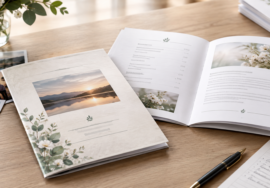
Brochures offer more format choices than flyers. Common folds include bi-fold (two panels per side), tri-fold (three panels per side) and Z-fold. Page-based formats, such as stapled booklets, suit longer content. Paper weight, coating and finishing also shape how the piece feels in the hand, and a heavier, well-finished brochure signals care for the product it presents. Ask your printer for samples before committing to a stock.
Distribution
Brochures tend to be handed over in a context where someone is already interested. Typical examples are sales meetings, showrooms, reception desks, trade shows and direct mail packs. Since the reader is more engaged, a brochure can justify a higher production effort than a flyer given away on the street.
How to Choose: A Simple Decision Tree
Answer these questions in order. Stop at the first clear result.
- Is your message one idea with one action?
Yes: choose a flyer. No: go to question 2. - Does the reader need details to compare, understand or trust you?
Yes: choose a brochure. No: go to question 3. - Will people see it for only a few seconds, such as a street handout or notice board?
Yes: choose a flyer. No: go to question 4. - Will it be given in a conversation, meeting or event where the reader has time?
Yes: choose a brochure. No: go to question 5. - Will the content stay valid for many months?
Yes: a brochure is a better long-term investment. No: a flyer is easier to update and reprint.
If you land between the two, a folded leaflet can be a middle ground. It offers more panels than a flat flyer without the page count of a full brochure.
Can You Use a Brochure and a Flyer Together?
Yes, and many businesses do. The two formats serve different stages of the customer journey.
- Awareness stage: A flyer draws attention to an offer or event and points to a web page or contact number.
- Consideration stage: A brochure supports the conversation with full product or service detail.
For example, a training centre might distribute flyers about an open day, then give a brochure to everyone who attends so they can review courses at home. Keep branding, colours and tone consistent so the two pieces feel like one campaign.
Practical Tips Before You Print
- Define the single goal first. If you can’t state it in one sentence, you may need a brochure.
- Write for the format. Cut flyer copy to the minimum. Organise brochure copy under clear headings.
- Plan for readability. Leave white space, use legible type sizes and avoid crowding panels.
- Check size and fold options. Common paper sizes include A4, A5 and DL, but availability and naming vary between printers.
- Request a proof. Review colour, trimming and fold alignment before the full run.
- Add a way to measure results. A QR code, dedicated phone number or offer code shows which piece performs.
Conclusion
The brochure vs flyer choice is not about which format is better. It is about which one matches your message. If you have one idea, a short window of attention and a clear action, a flyer is the right tool. If you need to explain, compare and build confidence, a brochure does that job better. When in doubt, work through the decision tree above, and consider using both together.
Frequently Asked Questions
What is the difference between a brochure and a flyer?
A flyer is usually a single sheet with a short, focused message such as a promotion or event notice. A brochure is a folded or multi-page piece that presents more detailed information about products, services or an organisation. Flyers aim for quick action, while brochures support longer reading and decision-making.
When should a business use a brochure?
Use a brochure when customers need detail before deciding, such as comparing products, understanding a service or reviewing company credentials. Brochures work well in sales meetings, trade shows, showrooms and direct mail, where the reader is already interested and willing to spend a few minutes reading.
Is a flyer cheaper than a brochure?
Flyers are generally simpler to produce, since they use a single flat sheet and usually need no folding. Brochures often involve more design, folding and finishing choices. Actual cost depends on quantity, paper, size and finish, so request a quote from your printer for both options.
Can a flyer be folded?
Yes. A flyer can be folded to fit an envelope or pocket, but once it gains multiple panels and structured sections it starts to function as a folded leaflet or brochure. The difference is mainly purpose: a folded flyer still carries one main message.
Which is better for a small business, a brochure or a flyer?
It depends on your goal. A flyer suits short campaigns like openings, discounts or local events. A brochure suits ongoing sales support, where you need to explain your range or services. Many small businesses start with a flyer and add a brochure as their offering grows.
What are the common brochure fold types?
Common brochure folds include bi-fold, which gives two panels per side, tri-fold, which gives three panels per side, and Z-fold, which opens in a zigzag. Booklet-style brochures use stapled pages for longer content. The right choice depends on how much content you have and how you want the reader to move through it.