
Funeral Booklet Printing UK: A Practical Guide
Arranging a funeral involves many important decisions, often at a difficult and emotional time. A funeral booklet printing UK service can help turn the information for the ceremony into a clear, organised printed booklet for family and friends.
A funeral booklet, often called an order of service, can include details about the ceremony, readings, hymns or music, tributes and photographs. It can also provide a meaningful keepsake for those attending.
There is no single format that every family must follow. The most important thing is to create a booklet that accurately reflects the person being remembered and gives guests the information they need.
What Is a Funeral Booklet?
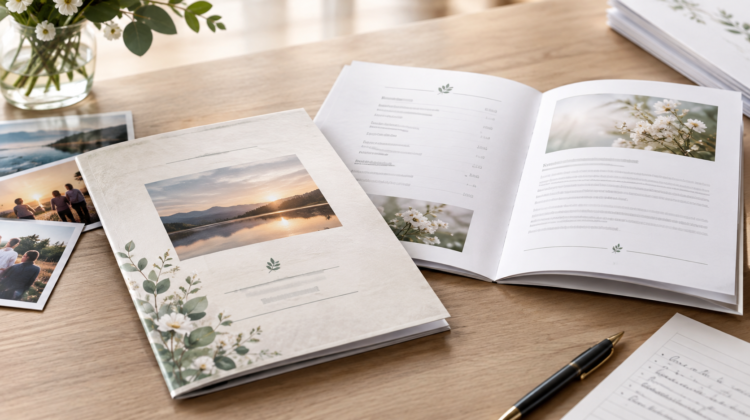
A funeral booklet is a printed document that helps people follow the order of a funeral or memorial service. It commonly includes the person’s name and important dates, service details, the running order of the ceremony, readings, music, photographs and personal tributes.
The exact contents depend on the type of service and the family’s wishes. An order of service can be simple and practical or more personal, with photographs, memories, poems and other meaningful content.
What Should a Funeral Booklet Include?
When preparing a funeral booklet, it can help to work through the content from the front cover to the final page.
1. Front Cover
The front cover usually introduces the person being remembered.
It may include:
- Full name
- Date of birth and date of death
- A favourite or meaningful photograph
- Date of the funeral or memorial service
- Venue details where appropriate
- A short introductory phrase or tribute
A photograph can make the cover personal, but there is no requirement to use one. Choose whatever feels appropriate for the family.
2. Order of the Service
The main section should explain what will happen during the ceremony and in what order.
Depending on the service, this may include:
- Entrance music
- Welcome or opening words
- Hymns or songs
- Readings
- Prayers
- Tribute or eulogy
- Reflection
- Committal
- Closing words
- Exit music
The exact running order should come from the funeral organiser, celebrant, minister or other person responsible for the service.
3. Readings, Hymns and Music
If guests are expected to participate in a hymn, song or reading, the relevant wording may be included in the booklet.
Music can also be listed so that attendees understand its place within the ceremony.
Before printing, check all supplied wording carefully. If copyrighted text is being reproduced, confirm that the necessary permission or licence is in place where applicable.
4. Personal Photographs
Photographs can help make a funeral booklet personal and reflective of the person’s life.
Families may choose photographs from different stages of life, such as childhood, family occasions, holidays, friendships, hobbies or important milestones.
Try to select images that work well together rather than simply choosing as many photographs as possible. A smaller selection of meaningful images can often create a more considered booklet.
5. Personal Tribute or Biography
Some families choose to include a short biography, tribute or collection of memories.
This could cover important aspects of the person’s life, including family, work, interests, achievements, friendships or memorable moments.
The amount of personal content should depend on what the family feels comfortable sharing.
6. Thank-You Message
A short thank-you message can be included towards the end of the booklet.
For example, the family may wish to thank relatives, friends, carers, colleagues or others who provided support.
The wording should be personal to the family rather than following a fixed formula.
How Do You Prepare a Funeral Booklet for Printing?
Preparing a funeral booklet is easier when the content is gathered before the final design is completed.
A practical process is:
- Gather the essential details
Collect the correct name, dates, service information and venue details. - Confirm the running order
Speak with the celebrant, minister, funeral organiser or relevant person about the ceremony sequence. - Collect photographs
Choose the photographs you want to include and check that you have suitable original image files where possible. - Prepare the written content
Gather readings, hymns, music details, tributes, poems and thank-you messages. - Arrange the pages
Organise the information into a logical sequence before