Branded Business Envelopes: Benefits and Design Tips
Branded business envelopes help businesses present a consistent identity whenever they send letters, invoices, proposals or other printed correspondence. By including your company logo, name and appropriate return-address details, you can make everyday business mail look more organised and professional.
An envelope is often the first part of a printed communication that a recipient sees. Coordinating it with your letterheads and other business stationery creates a more consistent experience from the outside of the envelope to the document inside.
In this guide, we explain when branded envelopes are useful, what information to include, how to plan an effective design and how to coordinate envelopes with your wider stationery.
What Are Branded Business Envelopes?
Branded business envelopes are envelopes printed with identifying elements such as a company name, logo, return address or brand colours. They are used for business correspondence and can be designed to complement other printed materials.
Unlike an envelope with only a handwritten sender address or a separately applied label, a branded envelope incorporates the business identity into its design.
Businesses can use printed envelopes for customer letters, invoices, quotations, contracts, supplier correspondence, appointment information and selected direct-mail campaigns.
The most suitable design depends on what you send, how frequently you send it and how your business communicates with its customers.
Why Should Businesses Use Branded Envelopes?
1. Create a consistent brand identity
Brand consistency involves using recognisable visual elements across the different places where people encounter your business. Your logo, colours, typography and overall design style can appear on your website, business cards, letterheads and envelopes.
When these materials share a consistent appearance, your correspondence feels more coordinated. This is particularly useful for businesses that regularly communicate with customers, suppliers and professional contacts.
2. Present business correspondence professionally
Invoices, quotations, contracts and formal letters can be important customer touchpoints. A carefully designed envelope helps present the communication in an organised way before the recipient opens it.
A clear logo, readable return address and uncluttered layout can make your correspondence easier to identify without overwhelming the envelope with unnecessary graphics.
3. Support everyday business communication
Businesses send different types of documents throughout the year. Using printed envelopes can help maintain a consistent appearance across routine correspondence, rather than relying on handwritten sender details or manually applied return-address labels.
If your business sends mail regularly, consider which envelope design will work across your most common communication needs.
4. Complement your printed stationery
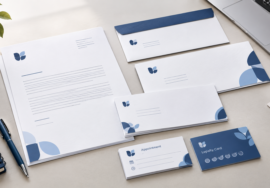
Envelopes work particularly well as part of a coordinated stationery set. Matching them with business letterheads and compliment slips creates a consistent appearance across the documents you send.
You do not need to make every item identical. Repeating a logo, colour palette and typography can be enough to create a recognisable visual connection.
What Should Go on a Business Envelope?
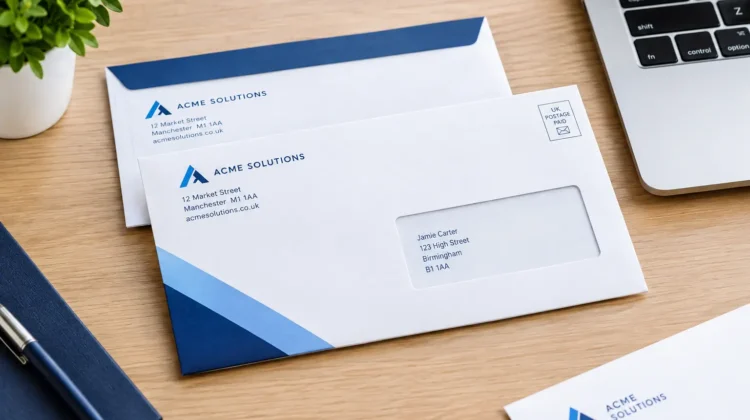
A professional business envelope should prioritise clear identification, a useful return address and sufficient space for the recipient’s address and postage.
Consider the following elements when planning your design.
- Company name: Make the sender easy to identify.
- Company logo: Use an appropriate, clear version of your existing brand logo.
- Return address: Include the relevant address where replies or returned mail should be directed.
- Brand colours: Use colours that complement your existing business stationery.
- Website address: Consider including your website if it is useful for recipients.
- Additional details: Add a short tagline or other information only when it serves a clear purpose.
Not every envelope needs every element. A simple logo and return address may be sufficient for routine correspondence.
If your company is registered in the UK, check the applicable requirements for business stationery and correspondence. GOV.UK explains the information that limited companies must display on business letters, order forms and websites. Do not assume that printing a logo and return address on an envelope satisfies every legal disclosure requirement. See the official guidance.
How to Design Professional Branded Business Envelopes
Step 1: Define how you will use the envelopes
Start by identifying the documents you regularly send. For example, an office might need envelopes for folded letters, while another business may frequently send larger documents that should remain unfolded.
Your intended use will help determine the appropriate envelope format and whether a windowed design is suitable.
Step 2: Keep the layout clear
Avoid filling every available space with logos, slogans and contact details. Choose a clear visual hierarchy so the company identity is easy to recognise without competing with the recipient’s address.
Keep the destination-address area and postage area clear, and confirm any layout requirements with your printer before finalising the artwork.
Step 3: Use suitable logo artwork
Use a high-quality version of your existing logo. Blurry images, excessively small text and poorly scaled artwork can make an otherwise professional design look untidy.
Check that the logo remains legible at the intended print size. If you are unsure whether your file is suitable, ask the printer to review it before production.
Step 4: Choose an appropriate envelope format
Consider the size of the documents you send and whether they need to be folded. A windowed envelope may be useful when the recipient’s address is positioned to show through the window on the enclosed document.
Confirm the available sizes, window positions, artwork requirements and printing options with your supplier rather than assuming every format is available.
Step 5: Check the final artwork
Before approving your design, check the spelling of your company name, return address, website and any other printed details.
Also review logo placement, margins, alignment and the space reserved for postal information. If a proof is provided, examine it carefully before giving approval.
How to Match Envelopes with Your Business Stationery
A coordinated stationery system helps your printed materials look like they belong to the same business.
Start with your existing logo and brand guidelines, then apply the same visual style to your main stationery items.
For example:
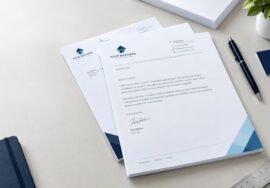
- Letterheads: Use the same logo and compatible colours for formal letters, quotations and business documents.
- Compliment slips: Carry the visual identity into short notes and package inserts.
- Business cards: Keep the overall brand style consistent across networking materials.
- Envelopes: Repeat the key brand elements while preserving a practical address and postage layout.
You can explore business letterhead printing and the wider stationery range when planning a coordinated set.
The aim is not to make every item look identical. It is to create a consistent, recognisable identity while allowing each printed product to serve its own purpose.
Branded Business Envelopes: A Practical Checklist
Use this checklist before preparing your envelope artwork or placing an order.
- Confirm which documents and correspondence the envelopes will carry.
- Select a suitable envelope size and format.
- Prepare a clear, high-quality company logo.
- Check the company name and return-address details.
- Keep the recipient-address and postage areas clear.
- Use colours and typography that complement your existing stationery.
- Confirm the printer’s artwork specifications and available options.
- Review all text and layout details before approving the final artwork.
Following these steps can help reduce avoidable design errors and make it easier to coordinate envelopes with the rest of your printed materials.
When Should You Consider Branded Business Envelopes?
Branded envelopes may be worth considering if your business regularly sends invoices, proposals, formal letters, customer communications or other printed documents.
They can also be useful when you are refreshing your existing stationery or preparing a consistent set of materials for a new business identity.
If you send very little physical mail, a simpler envelope design may be sufficient. The right choice depends on your communication needs, budget and existing stationery.
Before ordering, compare the available options, confirm the artwork requirements and decide which details are genuinely useful to the recipient.
Conclusion
Branded business envelopes are a practical part of a consistent business stationery system. A clear logo, accurate return address and well-planned layout can help your outgoing correspondence look organised and recognisable.
For the best result, choose a format suited to your documents, use suitable logo artwork and coordinate the design with your letterheads and compliment slips. Check every printed detail before approving the artwork.
If you are reviewing your business stationery, start with the envelopes you use most often and build a design that supports your everyday correspondence.
Frequently asked questions
1. Are branded envelopes useful for businesses?
Branded envelopes help businesses maintain a consistent appearance across their correspondence. They can display a company logo, name and return address, making them useful for invoices, customer letters, quotations and other business communications.
2. What should go on a business envelope?
A business envelope can include the company name, logo and return address, with brand colours or a website address where appropriate. Keep the design simple and leave sufficient room for the recipient’s address and postage information.
3. Should business envelopes match letterheads?
Matching envelopes and letterheads help create a consistent stationery identity. Use compatible logos, colours and typography while adapting the layout to suit each product’s purpose.
4. Which envelope size should a business choose?
Choose a size that accommodates your documents comfortably. Consider whether letters will be folded, whether larger documents need to remain flat and whether a windowed envelope would be useful.
5. Can I print my company logo on business envelopes?
Yes, branded envelope designs commonly include a company logo. Prepare a clear logo file and check the printer’s artwork requirements to ensure the design is suitable for the intended print size.
6. Can branded envelopes be part of a complete stationery set?
Yes. You can coordinate envelopes with letterheads, compliment slips and business cards by using compatible brand elements across the different products.
7. What should I check before ordering printed envelopes?
Check the envelope size, logo quality, return address, spelling, layout and space for postal information. Confirm the available formats and artwork requirements with your printer before approving the design.